
To be desirable

I took deep breaths, trying not to scream. My scalp burned like fire. It was some of the worst pain I’d ever endured. A timer went off, and I was beckoned to a large sink. The cool water stung like hell, but it brought wanted relief. My shoulders dropped as I exhaled. For the next week, I would pick at scabs.
This is the price I pay to blend in.
I visit the salon every ten weeks, bracing myself as the ritual plays out. I have a volatile relationship with the creamy white relaxer slathered all over my head, but I kept the routine for fourteen years. The pain felt like a necessary evil. When I tried to stop taming my hair’s texture, opting instead for the thick coils I was born with, I panicked. People might view me differently.
I’m wrong about a lot of things, but my fear about my hair wasn’t unfounded.
If you get dressed in the morning without thinking about your hair—not the obvious peering in a mirror to brush away flyaways or reaching for a curling iron, but really thinking—then you are fortunate. Something as seemingly uncontroversial as the hairstyle I wear is debated in the halls of state capitols. Minorities are expected to conform to norms, which often means embracing stereotypically White features and attitudes. My straight hair had long allowed me to feel less out of place in majority-White spaces, which I once viewed as a positive. I don’t know what I thought would happen when I stopped relaxing my hair, but it felt like a groundbreaking decision. In reality, people barely noticed.
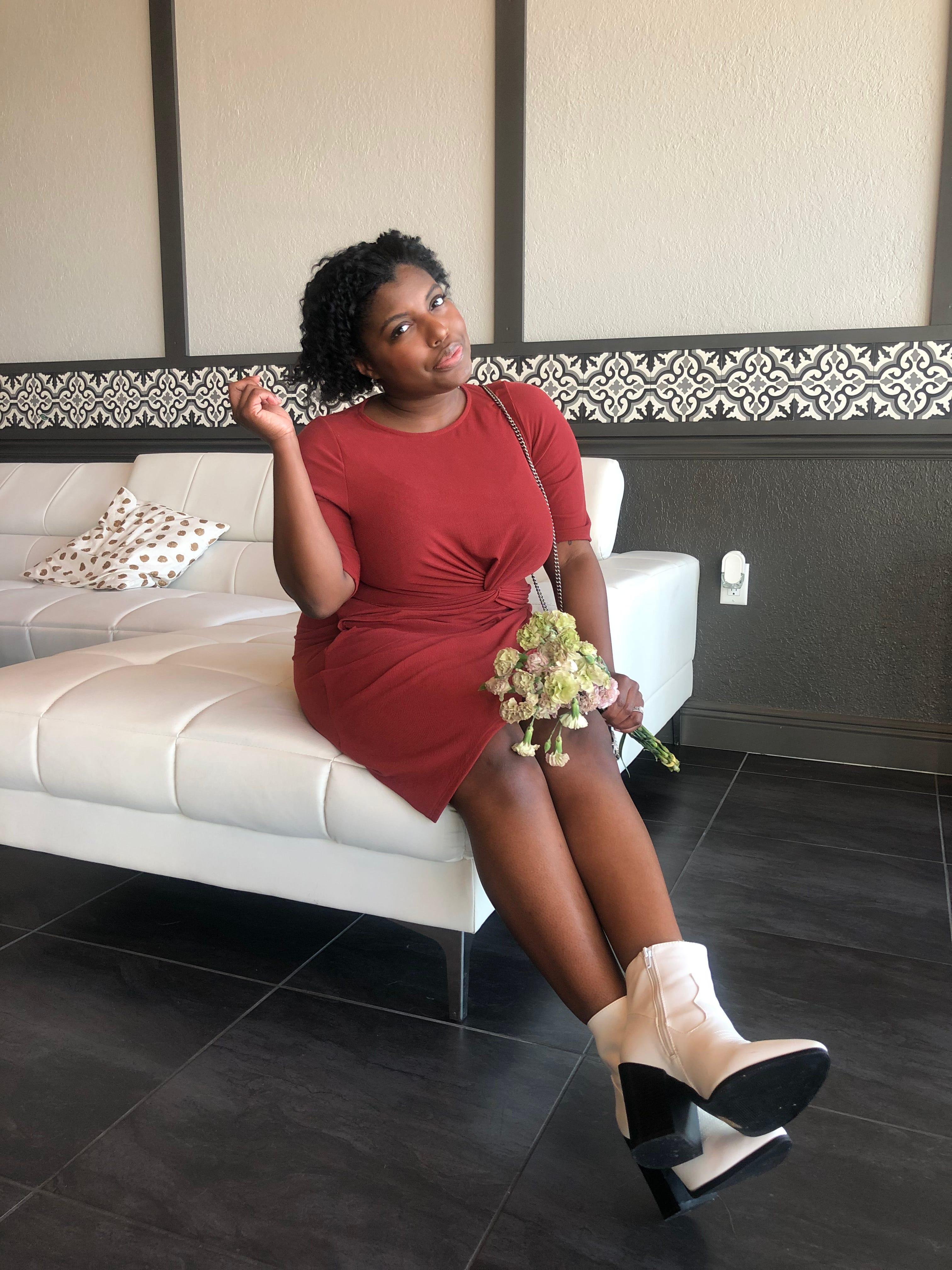
It’s been seven years since the day I decided I wanted to give my natural hair a try. I got my first relaxer at eleven years old, and it was all I’d known for my adult life. When I stopped, I felt free from the cost of maintenance and the stinging pain I cringed through every two months, shifting my weight from one leg to the other as I squirmed. Looking back, I wonder if my stylist left the product on for too long in pursuit of ultra-straight hair. Not everyone leaves with scalp burns.
I rarely wear my hair in its natural state these days, but that’s mainly due to laziness — as anyone with curly hair can tell you, it’s a lot of work, and I don’t have the patience to keep up with a complex routine. With two kids, my ideal beauty routine can be done in the crucial few minutes I have in the morning before my toddler wakes up yelling MAMA. I briefly considered just cutting off all my hair before realizing I’m too chicken. A few years ago, I picked up a flat iron again, and I haven’t really put it down since. Occasionally, I’ll wear crochet braids, but that’s the extent of my adventuring.
My current choice is one of convenience, not self-doubt, but I still worry that I’m doing something wrong. I know that straight hair fits mainstream standards, and I wonder if I’m subconsciously leaning toward my old way of thinking. I have a daughter, and the stakes feel higher now. It’s important to me that she doesn’t feel uncertain about her curls, and I feel pressure to lead by example. I’ll never forget how nervous I felt the first time I took a picture of my natural hair and shared it with my friends. The insecurity is deeply ingrained.
I can recall a moment when someone made a joke so funny that my friends and I doubled over giggling. (I can’t tell you what it was, but knowing the elementary age group, it probably involved potty humor.) I glanced at one of my friends whose cheeks were flushed from laughter and thought my cheeks can’t turn red like that. I was the only non-White kid in the room, and I felt something that I now recognize as jealousy. Why did I always have to be the odd one out? It became a theme. I’d smile uncomfortably when people told me I acted White, not knowing if I should take it as a compliment. To say someone should be grateful they aren’t like other Black people is obviously offensive, but I didn’t know it.
Growing up, my race made up only 2% of my hometown county’s demographic. My face stands out in class photos, a brown dot in a sea of light colors. In high school, a classmate remarked that many of our classes were “monochromatic” with me as the exception. I’m pretty sure I imagined it, but it felt like everyone in the room swiveled toward me to see how I’d react. My daughter’s school is only ten minutes from the one I attended, but things have changed. When her school pictures came back, I was pleasantly surprised at the diverse makeup of her class. Her teacher is Black, which is something I didn’t experience till high school.
The boys I liked didn’t date girls who looked like me. I once nervously confessed feelings at the end of the eighth grade, and the crush responded that he’d probably cheat on me daily if we got together. We’re Facebook friends to this day, and I wonder if he ever reflects on how his casual cruelty might’ve affected me. Doubt it. I spent my pubescent years desperate for male attention and felt disheartened when I was always an outsider.
Two decades later, reflecting on those lonely moments can still catch me off-guard. My desire was the same as anyone’s. I needed to fit in, to be cool, and to be perceived as attractive, but it felt impossible to camouflage myself. In middle school, I’d sometimes talk with my hand over my mouth because I was that self-conscious about my big lips. Imagine my shock when filler began to trend years later. Self-acceptance can be a hell of a journey, and it’s even more complicated when you’re bombarded with reminders of how different you are.
Sometimes, I still make a mental note when I’m standing out in a crowd. At thirty-three, I can handle my complex feelings better than I could as a preteen, but it isn’t always easy. I flash back to high school, when I knew that some of my friends jokingly used racial slurs but felt like I’d rock the boat too much if I said something. What would my childhood have looked like if I had genuinely cared for myself then? Would I have had a different experience if I’d called out microaggressions? I don’t have the answers, but I have the rest of my life to make up for it.
You didn’t have the tools or the skills then to advocate or care for yourself in that way, so you cared for yourself in the best way you knew how. It’s not the same way adult you cares for yourself, but it served you at the time. It’s heartbreaking to look back on little us, muddling through. But your kids have the benefit of all of your lived experiences, and they’ll hopefully have tools you wished you’d had then. ❤️
you have the most stunning widows peak I've ever seen!!!! adore adore adore.